 Apply for Financing
 855-410-TECH(8324)
 APPLY FOR FINANCING
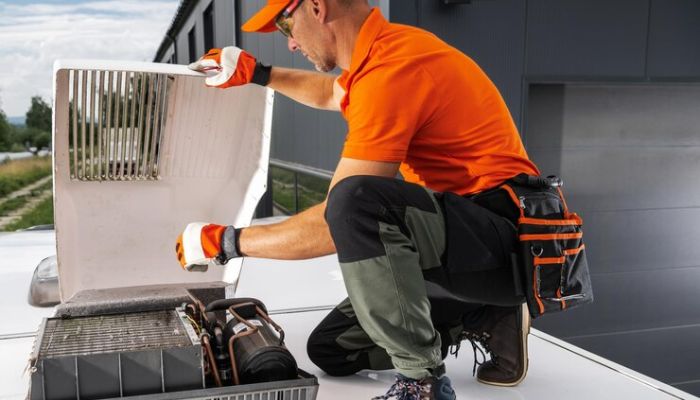
Commercial HVAC maintenance includes system inspection, filter replacement, coil cleaning, refrigerant checks, electrical inspection, lubrication, thermostat calibration, and ductwork evaluation to ensure efficiency, prevent breakdowns, and extend system lifespan.
8 Key Components of Commercial HVAC Maintenance
1. System Inspection & Performance Evaluation
Commercial HVAC maintenance begins with a complete system inspection. Technicians check all components, including thermostats, electrical connections, and airflow systems, to identify early signs of wear or failure in commercial buildings.
2. Air Filter Replacement or Cleaning
Dirty filters restrict airflow and reduce efficiency. Regular filter replacement or cleaning improves indoor air quality, lowers energy consumption, and prevents unnecessary strain on the system.
3. Cleaning Coils & Components
Evaporator and condenser coils collect dirt over time, reducing heat exchange efficiency. Coil cleaning ensures optimal performance, better cooling/heating, and improved energy efficiency.
4. Checking Refrigerant Levels
Low or incorrect refrigerant levels can lead to poor cooling and system damage. Maintenance includes checking refrigerant pressure, detecting leaks, and recharging if necessary.
5. Electrical System Inspection
Loose or damaged electrical connections can cause system failures or safety risks. Technicians inspect wiring, capacitors, and connections to ensure safe and reliable operation in industrial HVAC maintenance programs.
6. Lubrication of Moving Parts
Motors, bearings, and other moving parts require proper lubrication. This reduces friction, prevents wear and tear, and extends the lifespan of critical HVAC components.
7. Thermostat Calibration & Controls Check
Accurate temperature control is essential for energy efficiency. Maintenance includes calibrating thermostats and checking control systems to ensure consistent comfort across commercial buildings.
8. Ductwork Inspection & Airflow Optimization
Leaky or blocked ducts can waste energy and reduce comfort. Technicians inspect ductwork for leaks, obstructions, and airflow issues, ensuring efficient air distribution throughout the building.
Monthly Commercial HVAC Maintenance Tasks
These simple tasks, when done every month, prevent airflow restrictions and reduce strain on your HVAC equipment:
-
Replace or clean air filters
-
Clean supply and return air vents
-
Check thermostat accuracy and programming schedule
-
Remove dust from accessible components
-
Inspect for water leaks, rust, or unusual odors
-
Listen for strange noises or rattling inside indoor and rooftop units
During this stage, many facility managers choose to work with commercial HVAC contractors to handle multi-unit buildings and rooftop systems safely and efficiently.
Quarterly Commercial HVAC Maintenance Checklist
Every 3 months, your HVAC unit needs deeper attention to maintain efficiency and prevent wear and tear:
-
Clean condenser and evaporator coils
-
Check refrigerant levels and pressure
-
Lubricate motors, bearings, and moving parts
-
Inspect and tighten electrical connections
-
Check blower motor performance
-
Inspect belts for wear, tension, or looseness
-
Confirm airflow across the entire building
Skipping quarterly tasks is one of the most common reasons businesses later face costly commercial hvac repair.
Semi-Annual Maintenance for Seasonal Peak Performance
Before summer and winter arrive, the HVAC system must be prepared for temperature extremes. Both heating and cooling demand peak during these seasons.
Checklist for semi-annual tune-ups:
-
Inspect heat exchanger for cracks or signs of corrosion
-
Recalibrate thermostats and temperature sensors
-
Inspect and repair ductwork leaks
-
Check safety controls to prevent overheating or freezing
-
Clear clogged drain lines and pans to avoid overflow
-
Evaluate humidity levels and ventilation balance
These tune-ups ensure your HVAC doesn’t get pushed past its limits during the times when buildings rely on it most.
Check Annual Commercial HVAC Maintenance Priorities
Once a year, the system should undergo a total performance review—not just cleaning.
Annual tasks that protect equipment long-term:
-
Full system performance and efficiency test
-
Airflow and static pressure evaluation
-
Inspect for refrigerant leaks using electronic detection tools
-
Review energy usage trends to spot declining performance
-
Check compressor operation, ignition system, and control board
-
Perform a full safety inspection of electrical components
-
Conduct a lifecycle assessment to determine replacement timeline
For long-term budgeting, many managers reference resources covering how long commercial AC units last as part of planning for future upgrades:
Using replacement forecasting ensures the business isn’t hit with sudden HVAC expenses.
Final Takeaway
Commercial HVAC maintenance isn’t a once-a-year activity—it’s an ongoing process that protects your building, your employees, and your bottom line. A consistent schedule ensures your system runs efficiently, avoids breakdowns, and continues delivering dependable indoor comfort year-round.
If you’re unsure where to begin or don’t have a maintenance schedule in place, partnering with a reliable HVAC provider can ensure every step—monthly, quarterly, semi-annual, and annual—is handled correctly and on time.