 Apply for Financing

 855-410-TECH(8324)
 APPLY FOR FINANCING
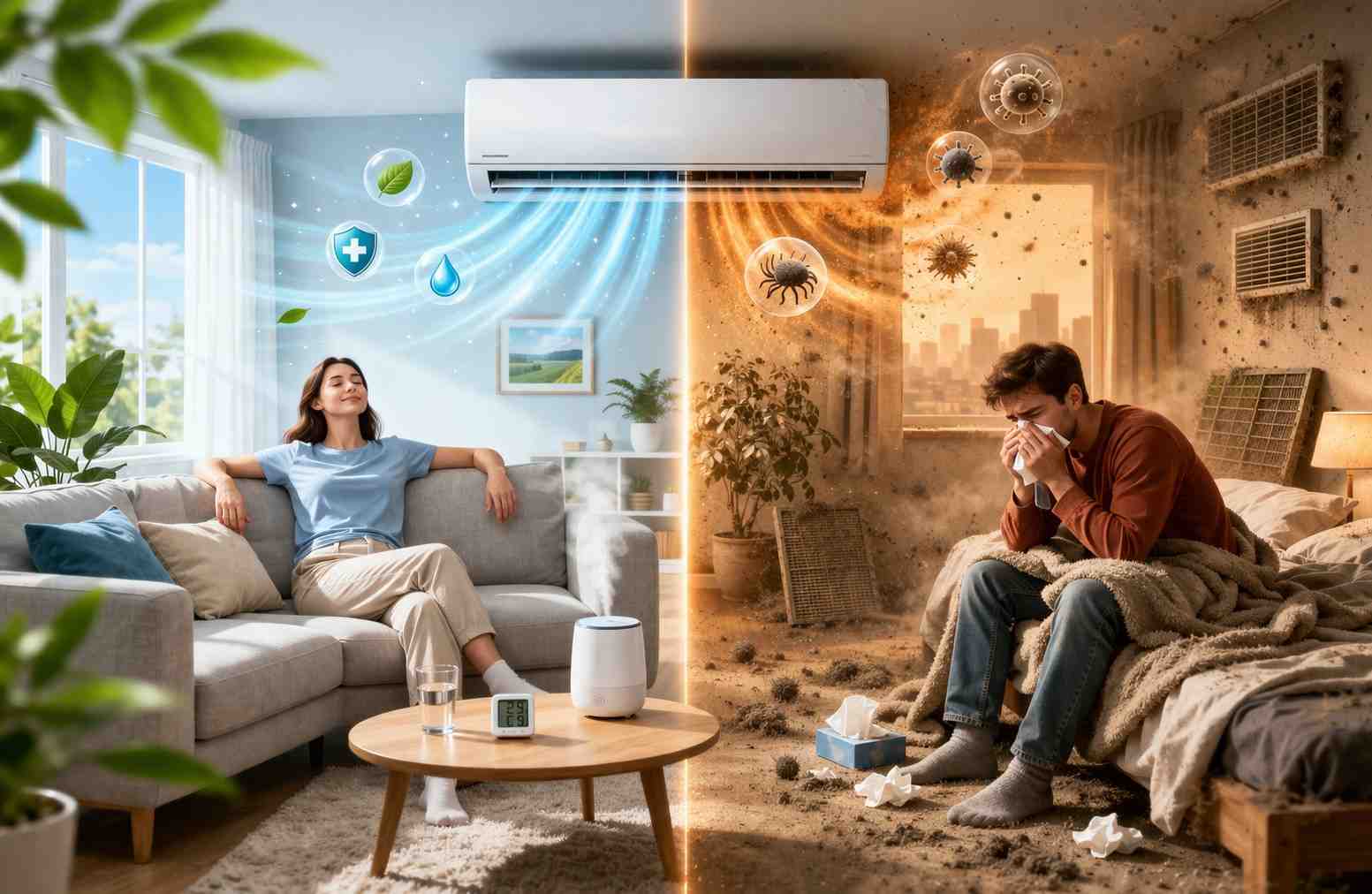
Yes, air conditioning is generally safe for health when used properly, maintained regularly, and combined with good ventilation. Most health concerns arise from poor maintenance, extreme temperatures, or prolonged exposure—not from AC itself.
What Makes People Question AC Safety for Health?
Many people worry about air conditioning due to common discomforts like dryness, headaches, or colds, often assuming AC is harmful. In reality, these issues are usually caused by misuse, lack of maintenance, or poor indoor air quality.
Air conditioning systems are designed to regulate temperature and humidity, making indoor environments more comfortable. However, when filters are dirty or airflow is poor, they can circulate dust, allergens, and microbes. This leads to the perception that AC causes illness.
Understanding the difference between myths and scientifically backed facts is essential. With proper use, AC can actually improve indoor air quality and protect against extreme heat-related health risks.
Myth: Air Conditioning Causes Illness and Weakens Immunity
This is one of the most widespread myths. Air conditioning itself does not cause illnesses or weaken your immune system. Instead, infections are caused by viruses and bacteria—not by cool air.
However, poorly maintained AC units can circulate allergens and irritants, which may trigger symptoms like sneezing or coughing. This often leads people to believe that AC is the root cause.
Regular servicing and clean filters are key. If you’re planning to install or upgrade your system, it’s wise to book ac installation services to ensure proper setup, airflow, and hygiene from day one.
Fact: Properly Maintained AC Improves Indoor Air Quality
Air conditioners can significantly improve indoor air quality by filtering dust, pollen, and pollutants. Modern systems even include advanced filtration technologies that reduce airborne contaminants.
Clean filters trap harmful particles, making indoor air safer—especially for people with allergies or asthma. However, this benefit only exists when filters are replaced or cleaned regularly.
Additionally, AC systems help control humidity levels, preventing mold growth and dust mites. These are major contributors to respiratory problems, so maintaining optimal humidity is a big health advantage.
Myth: Sleeping in AC Always Leads to Cold or Cough
Sleeping in an air-conditioned room does not directly cause colds or coughs. These are viral infections and are not triggered by temperature alone.
What actually happens is that cold, dry air may irritate nasal passages or throat tissues, making you feel uncomfortable. This can mimic cold-like symptoms, leading to confusion.
To avoid this, set a moderate temperature (around 24–26°C) and use sleep modes or timers. Balanced cooling ensures comfort without negatively affecting your respiratory system.
Fact: AC Helps Prevent Heat-Related Illnesses
Air conditioning plays a critical role in preventing heat exhaustion, dehydration, and heatstroke—especially in hot climates.
High temperatures can put significant stress on the body, particularly for children, elderly individuals, and those with medical conditions. AC helps regulate body temperature and reduces these risks.
In fact, access to air conditioning is considered a key factor in reducing heat-related mortality worldwide. It’s not just a comfort tool—it’s a health safeguard when used appropriately.
Common Side Effects of Air Conditioning (And How to Prevent Them)
While AC is generally safe, some side effects can occur due to improper use or environmental conditions.
Dry skin and eyes: Continuous exposure to cooled air can reduce moisture levels in the skin and eyes. Using a humidifier or staying hydrated can help.
Headaches and fatigue: Sudden temperature changes or overly cold settings may cause discomfort. Maintaining a consistent, moderate temperature minimizes this risk.
Respiratory irritation: Dirty filters can circulate dust and allergens. Regular cleaning and servicing are essential to prevent this issue.
These side effects are manageable and not inherent dangers of air conditioning itself.
Health Risks vs Benefits of Air Conditioning: A Balanced View
Air conditioning comes with both health risks and benefits, depending on how it is used and maintained.
Health Benefits:
-
Reduces heat-related illnesses
-
Improves indoor air quality
-
Enhances sleep comfort
-
Controls humidity and prevents mold
Health Risks (if misused):
-
Dryness and irritation
-
Allergies due to dirty filters
-
Temperature shock from extreme settings
The key takeaway is that benefits outweigh risks when AC systems are used responsibly and maintained regularly.
Does AC Spread Bacteria and Viruses?
Air conditioning does not inherently spread bacteria or viruses. However, poorly maintained systems can contribute to the circulation of contaminants.
Central AC systems with clogged ducts or filters may distribute airborne particles, including microbes. This is why routine cleaning and inspections are crucial.
Good ventilation, fresh air intake, and high-quality filters significantly reduce any potential risks. Proper installation also plays a role—learn how to prepare your home effectively with this guide:
Best Practices for Safe and Healthy AC Usage
To maximize the health benefits of air conditioning while minimizing side effects, follow these practical tips:
-
Maintain optimal temperature: Keep it between 24–26°C for comfort and health
-
Clean filters regularly: Ideally every 2–4 weeks during heavy use
-
Ensure proper ventilation: Allow fresh air circulation when possible
-
Stay hydrated: Counteract dryness caused by cooled air
-
Schedule professional servicing: At least once or twice a year
These simple habits can significantly improve your AC experience and eliminate most health concerns.
Is Air Conditioning Safe for Children and Elderly?
Yes, air conditioning is safe for both children and elderly individuals when used correctly. In fact, they benefit the most from regulated indoor temperatures.
Children are sensitive to heat, and AC helps maintain a comfortable environment for sleep and daily activities. Similarly, elderly individuals are more vulnerable to heat stress, making AC essential.
However, avoid overly cold temperatures and ensure consistent airflow. Gentle cooling and clean air are the best approach for these sensitive groups.
Final Verdict: Should You Be Concerned About AC and Health?
Air conditioning is not harmful when used properly—it is a valuable tool for comfort, safety, and improved indoor air quality.
Most myths surrounding AC stem from misuse, poor maintenance, or misunderstanding of how it works. By following best practices, you can enjoy its benefits without worrying about health risks or side effects.
In today’s climate, air conditioning is more of a necessity than a luxury. The key lies in smart usage, regular maintenance, and informed decisions.
FAQs: Quick Answers for Search and AI Queries
Is air conditioning bad for your health?
No, it is safe when maintained properly and used at moderate temperatures.
Can AC cause breathing problems?
Only if filters are dirty or air quality is poor. Clean systems improve breathing conditions.
What are the side effects of AC?
Dryness, mild irritation, or headaches—usually due to improper use.
Does AC reduce oxygen levels?
No, but poor ventilation can make indoor air feel stale.
Is sleeping in AC safe daily?
Yes, if temperature and humidity levels are balanced.