 Apply for Financing

 855-410-TECH(8324)
 APPLY FOR FINANCING
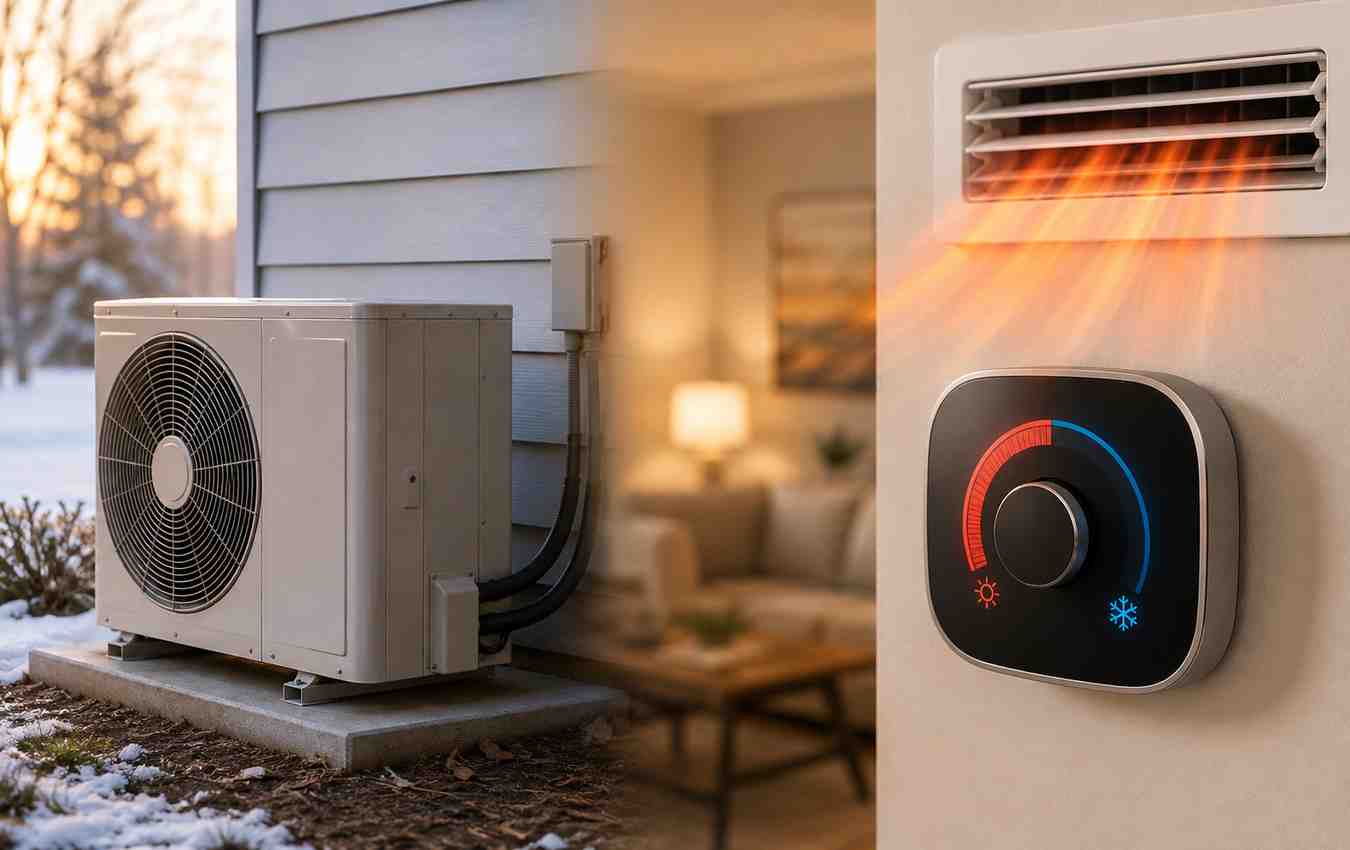
Auxiliary heat, often called AUX heat, is a supplemental heating source used by a heat pump when the heat pump cannot provide enough warmth on its own. It typically activates automatically during very cold outdoor temperatures or when the thermostat needs to raise the indoor temperature quickly. Although auxiliary heat helps maintain comfort, it usually consumes more energy than normal heat-pump operation and can increase heating costs.
What Is Auxiliary Heat?
Auxiliary heat is a backup heating function found in many heat pump systems. A heat pump normally transfers heat from outdoor air into your home rather than generating heat in the same way as a traditional furnace. When outdoor temperatures become extremely low, however, the heat pump may struggle to extract enough heat to maintain the desired indoor temperature.
At that point, the system can activate an additional heat source known as auxiliary heat. Depending on the HVAC system, AUX heat may use electric resistance heating elements or another supplemental heating method.
Auxiliary heat is different from emergency heat. AUX heat is designed to operate alongside the heat pump when additional heating capacity is needed. Emergency heat is manually selected when the primary heat pump cannot operate properly and the backup heating system needs to provide all the heat.
If your thermostat frequently displays AUX heat when temperatures are not particularly cold, it may be worth having an experienced HVAC contractor inspect the system. Frequent or prolonged auxiliary heating can sometimes indicate airflow restrictions, thermostat problems, refrigerant issues, or a heat pump that is struggling to operate efficiently. Homeowners who wish to seek professional help can engage a qualified heat pump repair service in their area to identify the root cause of the problem.
When Does Auxiliary Heat Turn On?
Most modern heat pumps activate auxiliary heat automatically when additional heating capacity is required. The exact activation point depends on the thermostat, outdoor temperature, heat pump design, and temperature difference between the desired and actual indoor temperatures.
AUX heat may activate in situations such as:
- Very cold outdoor temperatures: The heat pump may not be able to extract sufficient heat from extremely cold air.
- Large thermostat adjustments: Raising the thermostat several degrees at once can cause the system to request supplemental heating.
- Heat pump defrost cycles: During a defrost cycle, the system temporarily changes operation to remove ice from the outdoor coil.
- Rapid temperature recovery: AUX heat may assist when the home needs to reach the selected temperature quickly.
- System performance problems: Mechanical or airflow issues can cause the primary heating system to provide less heat than expected.
Occasional AUX heat operation during unusually cold weather is generally normal. However, if it remains on for long periods under moderate outdoor conditions, professional inspection may be appropriate.
How Does Auxiliary Heat Affect HVAC Performance?
Auxiliary heat can have both positive and negative effects on HVAC performance. Its primary benefit is maintaining indoor comfort when the heat pump alone cannot meet the home’s heating demand.
1. It Provides Additional Heating Capacity
The biggest advantage of AUX heat is that it gives the heating system additional capacity. Instead of allowing indoor temperatures to fall when the heat pump is struggling, the supplemental heating source helps the system reach and maintain the thermostat setting.
This can be particularly useful during periods of unusually cold weather.
2. It Can Increase Energy Consumption
Electric resistance auxiliary heat can consume considerably more electricity than a heat pump operating normally. A heat pump moves existing heat rather than creating all of its heat through electrical resistance, which generally makes normal heat-pump operation more energy efficient.
For this reason, frequent AUX heat operation can contribute to higher utility bills.
3. It Helps Maintain Indoor Comfort
When outdoor conditions challenge the heat pump, auxiliary heating helps prevent uncomfortable temperature drops inside the home. It can also shorten the amount of time needed to recover from a significant thermostat adjustment.
4. It May Indicate a Heating System Issue
AUX heat is not automatically a sign of a problem. However, unusually frequent activation can indicate that the heat pump is not performing as efficiently as it should.
Potential causes include:
- Dirty or restricted air filters
- Blocked outdoor coils
- Refrigerant problems
- Faulty sensors
- Thermostat issues
- Poor airflow
- Damaged components
- Inadequate heat pump sizing
- Ductwork problems
A professional HVAC inspection can help determine whether the AUX heat is responding normally or compensating for an underlying issue.
What Is the Difference Between Auxiliary Heat and Emergency Heat?
The terms AUX heat and emergency heat are sometimes confused, but they serve different purposes.
Auxiliary heat automatically supplements the heat pump when additional heating capacity is needed. The heat pump generally continues operating while AUX heat provides extra heating.
Emergency heat is a backup mode that is manually selected when the heat pump is unable to operate or requires repair. When emergency heat is active, the supplemental heating source becomes the primary source of indoor heating.
In simple terms:
- AUX heat: Supplemental heating that works with the heat pump.
- Emergency heat: Backup heating used when the heat pump is unavailable.
If emergency heat is running continuously, homeowners should arrange professional service rather than treating it as a normal long-term heating setting.
How Can You Reduce Auxiliary Heat Usage?
Some AUX heat operation is expected during particularly cold weather, but homeowners can take steps to reduce unnecessary activation.
– Maintain a Consistent Thermostat Setting
Avoid making large temperature adjustments. A sudden increase may cause the system to activate supplemental heating to reach the new setting more quickly.
– Replace or Clean Air Filters
A dirty filter can restrict airflow and make it harder for the heating system to distribute warm air effectively. Follow the filter manufacturer’s recommended replacement schedule.
– Keep the Outdoor Unit Clear
Leaves, grass, snow, and other debris can restrict airflow around the outdoor heat pump unit. Keep the area around the equipment clear according to the manufacturer’s recommendations.
– Schedule Preventive HVAC Maintenance
Regular heating and HVAC maintenance allows a professional to identify airflow, electrical, refrigerant, and mechanical problems before they reduce system performance.
– Check Your Home’s Insulation and Air Sealing
Poor insulation and air leaks can increase heating demand. Improving insulation around attics, walls, windows, and doors can help the home retain conditioned air more effectively.
For more guidance on managing a heat pump during cold weather, see this helpful resource on best thermostat settings for heat pumps during winter.
Is AUX Heat Bad for a Heat Pump?
No. AUX heat is not inherently bad for a heat pump. It is an important feature designed to provide supplemental heating when the primary heat pump needs assistance.
The concern is excessive or unexpected AUX heat operation. If AUX heat appears briefly during very cold weather, it may simply indicate that the system is functioning as designed. If it activates frequently, stays on for extended periods, or appears during relatively mild weather, an HVAC professional should evaluate the heating system.
Frequently Asked Questions About Auxiliary Heat
Is it normal for AUX heat to come on?
Yes. AUX heat can activate normally during very cold weather, defrost cycles, or when the thermostat requires rapid temperature recovery.
Does AUX heat use more electricity?
It can. Electric resistance auxiliary heat generally uses more electricity than normal heat-pump operation, so frequent AUX heat can increase energy consumption.
Why does my thermostat say AUX heat?
Your thermostat displays AUX heat when the heating system is using supplemental heat in addition to, or as directed by, the heat pump.
How long should auxiliary heat stay on?
There is no universal time limit. Brief activation can be normal, especially during cold conditions. Continuous or unusually frequent operation should be investigated.
Should I turn off AUX heat?
Generally, no. AUX heat is an automatic safety and comfort feature in many heat pump systems. Instead of disabling it, determine why it is activating if it runs excessively.
Is AUX heat the same as emergency heat?
No. AUX heat supplements the heat pump automatically, while emergency heat is a manually selected backup mode used when the primary heat pump cannot operate.