 Apply for Financing

 855-410-TECH(8324)
 APPLY FOR FINANCING
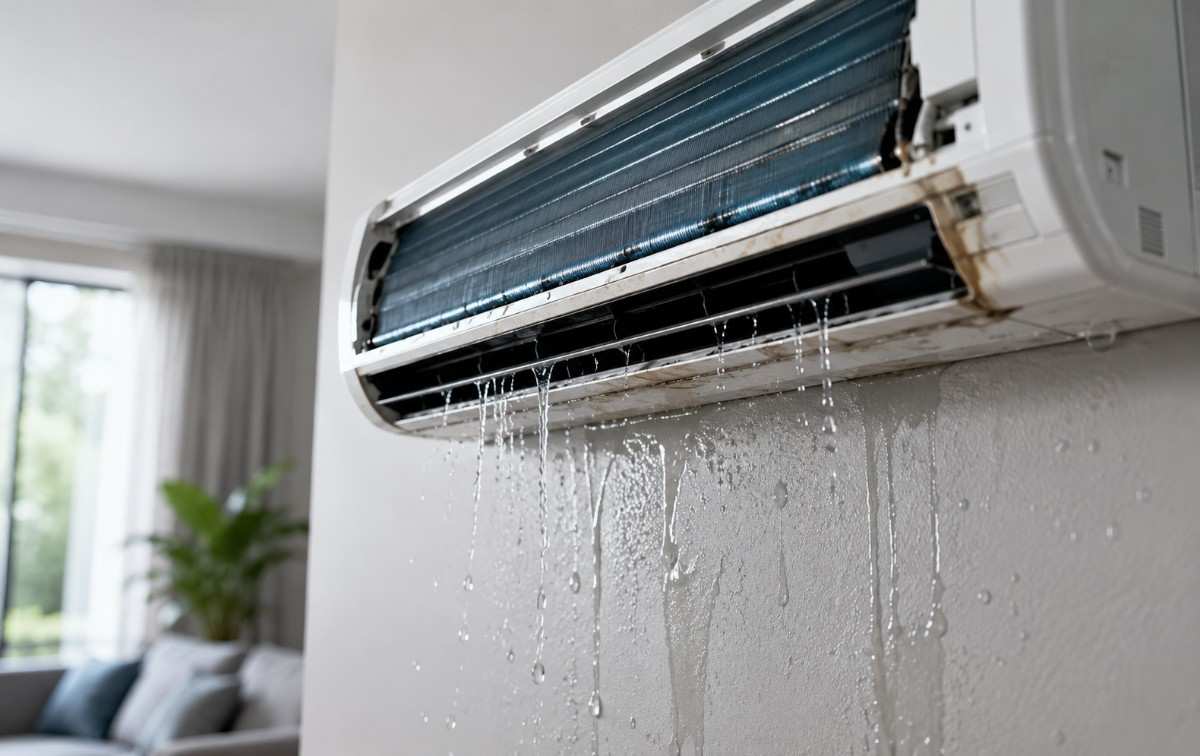
An AC unit usually leaks water because something is preventing moisture from draining properly. The most common causes include a clogged condensate drain line, a dirty air filter, low refrigerant levels, a damaged drain pan, frozen evaporator coils, or improper installation. While some minor issues can be resolved with basic maintenance, persistent water leaks should be inspected by an HVAC professional to prevent water damage, mold growth, and costly system repairs.
If you notice water pooling around your indoor air conditioner, don’t ignore it. A leaking AC is often an early warning sign that your cooling system needs attention before a small problem becomes an expensive repair.
Why Is My AC Unit Leaking Water?
During normal operation, your air conditioner removes humidity from indoor air. The moisture condenses on the evaporator coil and flows into a drain pan before exiting through the condensate drain line.
When any part of this drainage process fails, water begins to overflow and leak around the indoor unit.
8 Most Common Reasons Your AC Unit Leaks Water
1. Clogged Condensate Drain Line
A blocked condensate drain line is the leading cause of AC water leaks.
Over time, dirt, algae, mold, dust, and debris accumulate inside the drain line, restricting water flow. Instead of draining outside, condensation backs up into the drain pan until it overflows.
Common signs include:
- Water pooling around the indoor unit
- Musty odors near vents
- High indoor humidity
- AC shutting off unexpectedly due to safety switches
Regular ac service helps keep the drain line clear and prevents recurring leaks.
2. Dirty Air Filter Restricts Airflow
Many homeowners don’t realize that a dirty air filter can eventually cause water leaks.
When airflow becomes restricted, the evaporator coil gets too cold and freezes. Once the ice melts after the system cycles off, excess water may overwhelm the drain system and leak onto the floor.
Replacing your air filter every one to three months improves airflow, energy efficiency, and overall air conditioning performance.
3. Low Refrigerant Levels
Low refrigerant doesn’t directly create water, but it contributes to frozen evaporator coils.
Reduced refrigerant pressure lowers coil temperature below freezing. Ice forms on the coil, and when it melts, the drain pan may not be able to handle the excess water.
If your AC is leaking while also struggling to cool your home, blowing warm air, or running longer than usual, it’s time to schedule professional ac unit repair. An experienced ac contractor can diagnose refrigerant issues, repair leaks, and restore proper system performance before additional damage occurs.
4. Damaged or Rusted Drain Pan
Older air conditioning systems often develop rusted or cracked drain pans.
Even if the drain line works correctly, water can escape through holes or corrosion in the pan.
Signs of a failing drain pan include:
- Water dripping directly beneath the indoor unit
- Visible rust or corrosion
- Frequent leaks despite a clear drain line
Replacing the drain pan is usually a straightforward repair for a qualified HVAC technician.
5. Frozen Evaporator Coil
Frozen evaporator coils are another frequent cause of indoor water leaks.
Several issues can lead to coil freezing:
- Dirty air filters
- Low refrigerant
- Blocked supply vents
- Dirty evaporator coils
- Faulty blower motors
When the ice eventually melts, large amounts of water can overflow the drain pan.
If you notice ice buildup on refrigerant lines or inside your indoor unit, turn the system off and allow it to thaw before requesting professional air conditioner services.
6. Improper AC Installation
An improperly installed AC system may never drain condensation correctly.
Common installation problems include:
- Incorrect unit leveling
- Poor drain line slope
- Loose drain connections
- Improper condensate pump installation
Even a slight tilt in the wrong direction can prevent water from flowing into the drain line.
Hiring an experienced ac contractor ensures your system is installed according to manufacturer specifications.
7. Broken Condensate Pump
Many homes use a condensate pump when gravity drainage isn’t possible.
If the pump fails due to age, electrical issues, or mechanical wear, water collects inside the reservoir until it overflows.
Warning signs include:
- Water around the indoor unit
- Pump not activating
- Strange buzzing noises
- AC shutting down unexpectedly
A faulty pump should be repaired or replaced promptly to prevent water damage.
8. Disconnected or Damaged Drain Line
Drain lines can become loose, cracked, or disconnected over time.
This allows condensation to escape before reaching the outdoor drain point.
Routine HVAC inspections help identify these issues before they cause flooring, drywall, or ceiling damage.
Can You Keep Running an AC That Is Leaking Water?
It’s generally not recommended.
Although a small leak may seem harmless, continued operation can lead to:
- Water damage to walls and flooring
- Mold and mildew growth
- Electrical hazards
- Reduced cooling efficiency
- More expensive HVAC repairs
If you notice significant leaking, switch off your AC and arrange for an inspection.
How to Prevent AC Water Leaks?
Preventive maintenance is the most effective way to avoid unexpected leaks.
Follow these simple tips:
- Replace air filters regularly.
- Schedule annual professional HVAC maintenance.
- Keep condensate drain lines clean.
- Check the drain pan for rust or damage.
- Ensure vents remain open and unobstructed.
- Monitor refrigerant levels.
- Inspect your indoor unit for unusual moisture.
If your system suddenly stops cooling after maintenance or a power interruption, learning how to properly reset your air conditioner unit may help restore normal operation before scheduling a service call.
Routine maintenance not only prevents leaks but also extends equipment lifespan, improves energy efficiency, and reduces unexpected repair costs.
Final Thoughts
A leaking AC unit is more than just an inconvenience—it often signals an underlying issue that requires attention. Whether the cause is a clogged drain line, frozen evaporator coil, low refrigerant, or damaged drain pan, addressing the problem early can save money and protect your home from water damage.
Routine maintenance, regular filter changes, and professional HVAC inspections remain the best ways to keep your air conditioning system running efficiently throughout the cooling season. If your AC continues leaking despite basic maintenance, don’t wait for the problem to worsen. A qualified HVAC professional can quickly diagnose the cause and recommend the right solution to restore reliable cooling.
Frequently Asked Questions
Why is my AC leaking water inside my house?
The most common causes are a clogged condensate drain line, frozen evaporator coil, dirty air filter, damaged drain pan, or low refrigerant levels.
Is it normal for an AC unit to drip water outside?
Yes. Outdoor dripping is usually normal because condensation is draining properly. Water leaking inside the home is not normal and should be investigated.
Can a dirty air filter cause an AC to leak water?
Yes. A dirty filter restricts airflow, causing the evaporator coil to freeze. When the ice melts, excess water can overflow the drain pan.
How much does it cost to repair a leaking AC?
Repair costs vary depending on the cause. Cleaning a clogged drain line is generally inexpensive, while refrigerant leaks, evaporator coil repairs, or pump replacements may cost more.
Should I turn off my AC if it’s leaking water?
Yes. Turning off the system helps prevent water damage and allows the unit to thaw if frozen coils are causing the leak.
How often should my AC be serviced?
Most HVAC professionals recommend scheduling ac service at least once a year, ideally before the cooling season begins, to keep your system operating efficiently and prevent common problems like water leaks.