 Apply for Financing

 855-410-TECH(8324)
 APPLY FOR FINANCING
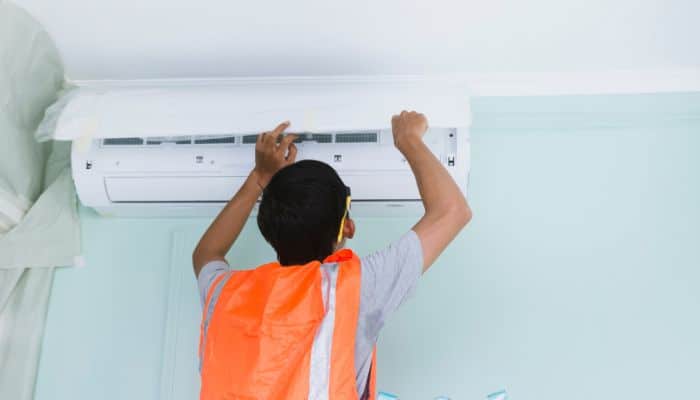
If your air conditioner suddenly stops working, a reset may restore normal operation when the problem is caused by a temporary electrical interruption, thermostat issue, or system protection shutdown. To reset a central AC, turn the thermostat off, switch off the AC circuit breaker, wait several minutes, restore power, and then turn the thermostat back to cooling. If your system has a manufacturer-specific reset procedure, follow the owner’s manual instead.
A reset can solve a temporary fault, but it will not repair problems such as refrigerant leaks, electrical component failure, frozen coils, compressor problems, or persistent airflow issues. If your AC repeatedly shuts down or will not restart after a safe reset, professional diagnosis is recommended.
When Should You Reset Your Air Conditioner?
You may consider resetting your AC when:
- The system stopped working after a power outage.
- The thermostat appears to be working incorrectly.
- The AC suddenly stops responding.
- The outdoor unit is not running even though the thermostat is calling for cooling.
- The system experienced a temporary electrical interruption.
- The AC has shut itself down and the cause is not immediately obvious.
A reset is best viewed as a basic troubleshooting step, not a replacement for professional AC repair.
If your air conditioner is running but blowing warm air, resetting it may not solve the underlying issue. Common causes include thermostat settings, restricted airflow, dirty filters, refrigerant problems, electrical faults, and compressor issues. For those symptoms, see our guide on why an air conditioner blows warm air.
Before You Reset Your AC: Safety First
Air conditioning systems contain high-voltage electrical components. Even when the system is switched off from the thermostat, electrical power may still be present at the equipment.
Before resetting your AC:
- Do not open electrical panels or remove covers.
- Do not touch wiring, capacitors, or other electrical components.
- Keep children and pets away from the outdoor unit.
- If you smell burning, see smoke, hear loud electrical buzzing, or notice damaged wiring, stop troubleshooting.
- Follow your air conditioner’s manufacturer’s instructions whenever available.
- If you are uncomfortable operating the circuit breaker, contact a qualified HVAC professional.
A basic reset should not require you to work inside the air conditioner.
How to Reset an Air Conditioner Step by Step?
For many central residential air conditioning systems, you can perform a basic power reset without opening the equipment.
Step 1: Turn the Thermostat Off
Set your thermostat to OFF.
Wait a moment to make sure the indoor blower and outdoor condenser have stopped operating.
If you have a smart thermostat, check that it is responding normally and that it has not lost power or entered an unusual operating mode.
Step 2: Locate the AC Circuit Breaker
Find the electrical panel that supplies power to your air conditioning system.
Look for the breaker labeled:
- AC
- Air Conditioner
- Condenser
- HVAC
If the breaker is already tripped, do not repeatedly reset it. A breaker that trips again can indicate an electrical problem that needs attention.
Step 3: Turn Off the AC Breaker
Switch the appropriate AC breaker to the OFF position.
Do not remove the electrical panel cover or attempt to access internal wiring.
Step 4: Wait Before Restoring Power
Leave the AC power off for several minutes.
Waiting gives the system time to fully shut down and can allow temporary control or protection faults to clear.
Some systems have built-in compressor protection that delays startup after power is restored. Therefore, the AC may not start immediately after the reset.
Step 5: Turn the Breaker Back On
Return the AC circuit breaker to the ON position.
Do not repeatedly switch the breaker on and off.
If the breaker will not stay on, leave it off and contact an HVAC professional.
Step 6: Turn the Thermostat Back to Cool
Set your thermostat to COOL and select a temperature below the current indoor temperature.
For example, if your home is 78°F, you might set the thermostat to 72–74°F.
Do not keep lowering the temperature repeatedly if the system does not start. A lower thermostat setting will not fix an underlying mechanical or electrical problem.
Step 7: Give the AC Time to Restart
Your air conditioner may not start immediately.
Allow several minutes for the thermostat, indoor equipment and outdoor condenser to respond. Some systems intentionally delay compressor startup to protect the equipment.
Check whether:
- The indoor blower starts.
- The outdoor unit starts.
- Cool air comes from the vents.
- The thermostat continues calling for cooling.
- The system runs without unusual noises.
If the AC starts and maintains cooling normally, the reset may have cleared a temporary issue.
Does Every Air Conditioner Have a Reset Button?
No. Not every air conditioner has a dedicated reset button.
This is an important distinction because reset procedures vary by manufacturer and model. Some equipment may have a reset or protection control, while other systems are reset by cycling power through the thermostat and electrical disconnect or breaker.
Do not press an unidentified button simply because it looks like a reset button.
Instead:
- Check the owner’s manual.
- Look up the exact model’s manufacturer instructions.
- Use the basic power-reset procedure only when appropriate.
- Avoid opening panels or interacting with internal electrical components.
The current version of this article suggests that many modern systems have a small red reset button and recommends holding it for 3–5 seconds. That is too general for a universal guide because reset features and procedures differ between air conditioner models.
How to Reset an AC Without a Reset Button
If your air conditioner does not have a dedicated reset button, a basic power cycle may be the appropriate troubleshooting step.
Quick procedure:
- Turn the thermostat to OFF.
- Switch the AC circuit breaker to OFF.
- Wait several minutes.
- Turn the breaker back ON.
- Set the thermostat to COOL.
- Set a reasonable cooling temperature.
- Wait several minutes for the system to restart.
If the system still does not operate, do not repeatedly cycle the breaker. Repeated electrical resets can mask a more serious problem.
What Should You Check Before Resetting Your AC?
A reset is not always necessary. A few basic checks can help identify simple problems first.
Check the Thermostat
Make sure:
- The thermostat is set to COOL.
- The desired temperature is below the current room temperature.
- The display is working.
- Batteries are not depleted if your thermostat uses batteries.
Check the Air Filter
A heavily clogged filter can restrict airflow and cause cooling problems.
A dirty filter can contribute to:
- Weak airflow
- Reduced cooling
- Longer operating cycles
- Frozen coils
- Increased system strain
Replace the filter according to the manufacturer’s recommendations and household conditions.
Check the Circuit Breaker
Look for an AC breaker that has tripped.
If it trips again after being reset, stop troubleshooting and arrange for an inspection.
Check the Outdoor Unit
Look at the outdoor condenser without opening it.
Make sure there is no obvious debris blocking the surrounding airflow. Leaves, grass and other debris can interfere with condenser performance.
Do not remove electrical covers or attempt to clean internal components yourself.
Why Is My AC Still Not Working After a Reset?
If your AC does not restart after a safe reset, the problem may be more than a temporary control issue.
Potential causes include:
1. Electrical Problems
A failed capacitor, contactor, wiring issue or other electrical fault can prevent the system from operating.
2. Refrigerant Problems
Low refrigerant caused by a leak can prevent the system from cooling properly. Refrigerant service should be performed by a qualified professional.
3. Frozen Evaporator Coil
A frozen coil can restrict airflow and reduce cooling performance. Restricted airflow, dirty filters and refrigerant problems can contribute to freezing.
4. Thermostat Problems
A faulty thermostat or communication problem can prevent the system from receiving the correct cooling command.
5. Compressor Failure
The compressor is a critical component of the cooling system. If it fails, resetting the AC will not correct the mechanical problem.
6. Condenser or Fan Problems
If the outdoor unit does not operate correctly, the system may require clear diagnosis.
7. Aging Equipment
Older systems can develop repeated electrical, mechanical and efficiency problems. If your AC frequently needs resets or repairs, replacement may eventually be more practical than continued troubleshooting.
Why Does My AC Keep Shutting Off?
An air conditioner that repeatedly shuts down should not simply be reset again and again.
Frequent shutdowns can be associated with:
- Restricted airflow
- Dirty filters
- Frozen coils
- Electrical problems
- Refrigerant issues
- Overheating
- Thermostat problems
- Compressor or fan problems
- Incorrect system sizing
If the same problem returns after every reset, the reset is treating the symptom rather than the cause.
How Long Does It Take for an AC to Restart After a Reset?
In many systems, the air conditioner should respond within several minutes after power and thermostat settings are restored.
However, do not assume that an immediate startup is required. Modern air conditioners may include compressor protection or built-in startup delays.
If the indoor blower operates but the outdoor condenser does not start after a reasonable delay, or if the system never produces cool air, further troubleshooting may be necessary.
How to Prevent Frequent AC Shutdowns?
Regular maintenance can reduce the likelihood of unexpected cooling problems.
Homeowners should:
- Check and replace air filters regularly.
- Keep the outdoor unit area clear.
- Make sure supply and return vents are not blocked.
- Keep the thermostat operating correctly.
- Schedule HVAC maintenance.
- Address unusual sounds or cooling changes early.
- Have recurring electrical or refrigerant problems professionally diagnosed.
Routine maintenance is especially valuable before periods of heavy summer cooling demand.
When Is AC Replacement a Better Option?
If your air conditioner is older, inefficient and requiring frequent repairs, replacement may make more sense than repeatedly troubleshooting the same problems.
Before replacing a system, consider:
- Equipment age
- Repair history
- Energy costs
- Cooling performance
- Indoor comfort
- System efficiency
- Expected repair costs
- Availability of replacement parts
Choosing a replacement system should also involve proper sizing rather than simply buying a unit with the same capacity as the old equipment.
For homeowners researching replacement options, our guide to how much a new air conditioning unit costs can help explain the factors that influence installation pricing.
Frequently Asked Questions
How do I reset my air conditioner?
Turn the thermostat off, switch off the AC circuit breaker, wait several minutes, restore power, and set the thermostat back to COOL. Follow the manufacturer’s instructions if your model has a specific reset procedure.
Where is the reset button on an AC unit?
Not every air conditioner has a dedicated reset button. If your model does, its location and operation depend on the manufacturer and model. Check the owner’s manual rather than assuming a button is a reset control.
How long should I wait after resetting my AC?
Wait several minutes after restoring power before expecting the system to start. Some air conditioners have built-in compressor protection delays.
Can I reset my AC by turning the breaker off?
For many central AC systems, turning off the appropriate circuit breaker as part of a controlled power cycle can reset the system. Only operate the breaker safely and do not open electrical panels or touch wiring.
Why is my AC not turning on after I reset it?
Possible causes include a tripped breaker, thermostat problem, electrical component failure, airflow restriction, compressor issue or another mechanical fault. If the system does not restart after a safe reset, professional diagnosis may be necessary.
Why does my AC keep needing to be reset?
Repeated resets usually indicate an underlying problem rather than a normal operating condition. Electrical faults, airflow problems, refrigerant issues, thermostat problems and aging equipment can all contribute to repeated shutdowns.
Should I reset my AC if the breaker keeps tripping?
No. If the breaker trips again after being reset, do not repeatedly switch it back on. Repeated breaker trips can indicate an electrical problem that requires attention.
Will resetting my AC fix an air conditioner blowing warm air?
Sometimes, if the cause is a temporary control or power issue. However, warm air can also result from restricted airflow, refrigerant problems, frozen coils, electrical faults or compressor issues. A reset will not repair those underlying problems.
Final Takeaway
Resetting an air conditioner can solve a temporary power or control problem, but it is not a universal fix. For a typical central AC, start by turning the thermostat off, safely switching off the AC breaker, waiting several minutes, restoring power and returning the thermostat to COOL.
If your air conditioner still does not work, the breaker repeatedly trips, the system keeps shutting down, or the AC runs without cooling, stop repeatedly resetting it. Those symptoms can point to an electrical, refrigerant, airflow or mechanical problem that needs professional diagnosis.