 Apply for Financing

 855-410-TECH(8324)
 APPLY FOR FINANCING

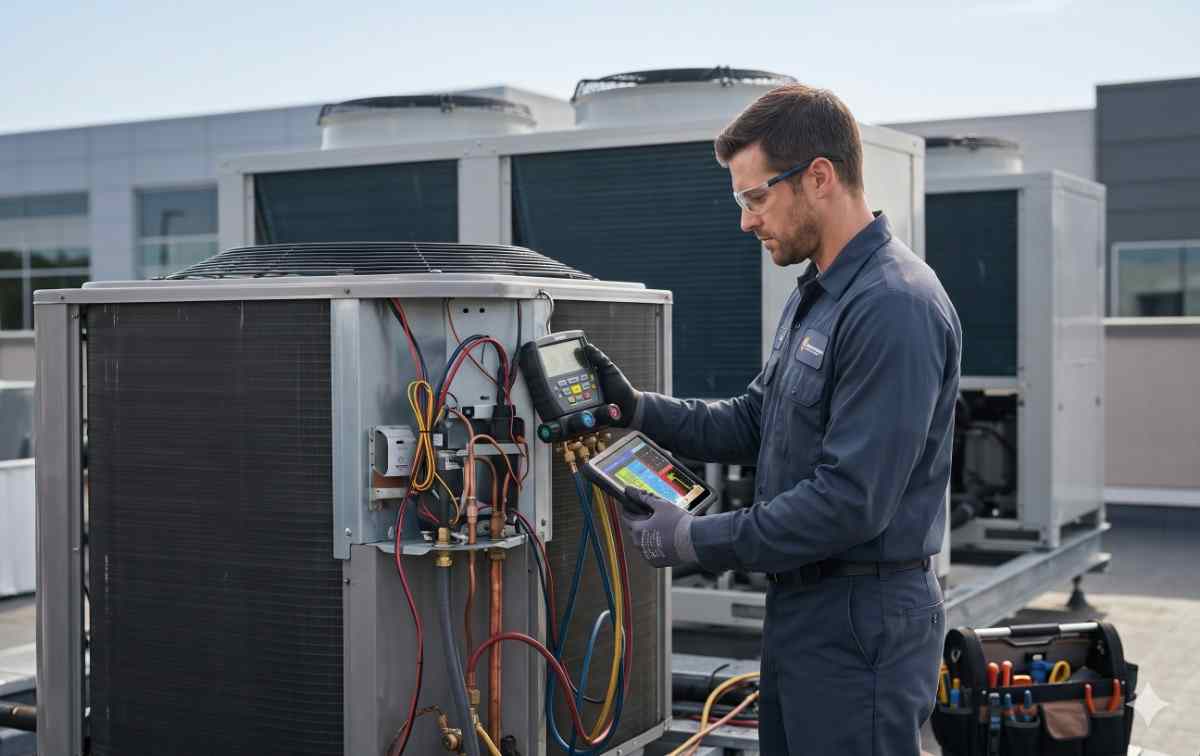
The highest-paid HVAC technicians are often experienced specialists who work with commercial refrigeration, industrial HVAC systems, building automation, and advanced climate-control equipment. Technicians with strong diagnostic skills, specialized certifications, leadership responsibilities, or their own HVAC businesses may earn significantly more than entry-level workers. However, the highest-paying specialty depends on location, experience, employer, overtime opportunities, and the complexity of the systems being serviced.
For anyone exploring an HVAC career, understanding which skills employers value most can help identify opportunities for higher earnings and long-term professional growth.
How Much Does an HVAC Technician Make?
HVAC technician salaries vary considerably across the United States. According to the U.S. Bureau of Labor Statistics (BLS), the median annual wage for heating, air conditioning, and refrigeration mechanics and installers was $61,010 in May 2025, equivalent to approximately $29.33 per hour. The highest-paid 10% earned more than $95,210 annually.
These figures cover the occupation as a whole, not a specific HVAC specialty. Individual technicians may earn more or less depending on their technical expertise, working hours, certifications, and local demand.
If you’re researching HVAC career opportunities, it is also useful to understand the equipment these professionals install and maintain. For example, businesses evaluating their cooling infrastructure may need to request commercial hvac replacement when existing equipment becomes unreliable, inefficient, or too expensive to maintain.
Top 5 HVAC Specialties With Strong Earning Potential
There is no single official national ranking that identifies one specialty as the highest-paid HVAC technician job. However, several technical career paths offer opportunities to increase earning potential.
1. Commercial and Industrial HVAC Technician
Commercial and industrial HVAC technicians service complex heating and cooling systems in office buildings, hospitals, manufacturing facilities, schools, and other large properties.
Their responsibilities may include diagnosing equipment failures, maintaining rooftop units, troubleshooting electrical components, and supporting large-scale HVAC installations.
Why this specialty can pay well:
- Complex equipment requires advanced troubleshooting skills.
- Equipment failures can disrupt business operations.
- Some positions involve emergency callouts or overtime.
- Experience with large systems can open doors to senior technical roles.
2. Commercial Refrigeration Technician
Commercial refrigeration technicians maintain systems used in supermarkets, restaurants, food-storage facilities, and industrial refrigeration environments.
They work with compressors, evaporators, refrigerant circuits, temperature controls, and other specialized components.
Technicians who can diagnose difficult refrigeration problems and understand applicable refrigerant-handling requirements may be valuable to employers operating around the clock.
3. HVAC Controls and Building Automation Technician
HVAC controls specialists work with programmable controllers, sensors, thermostats, building management systems, and automated climate-control equipment.
Their work combines traditional HVAC knowledge with electrical troubleshooting, control logic, and sometimes networking or software configuration.
As buildings adopt increasingly sophisticated energy-management systems, these skills can help technicians qualify for specialized service, commissioning, and controls positions.
4. Industrial HVAC and Chiller Technician
Chiller technicians service large cooling systems used in commercial buildings, healthcare facilities, industrial plants, and other environments with substantial cooling requirements.
These systems may require advanced knowledge of refrigeration cycles, water circulation, electrical systems, and equipment performance.
Specialized chiller experience can help technicians pursue senior service, commissioning, or technical support positions.
5. HVAC Service Manager or Senior Field Technician
Experienced technicians may increase their earnings by moving into leadership positions.
An HVAC service manager may supervise technicians, schedule service calls, manage customer relationships, oversee quality standards, and help coordinate installations and repairs.
Senior field technicians may also train apprentices, resolve difficult equipment failures, and support complex commercial projects.
Actual compensation varies by employer, and management roles may have different pay structures from hands-on technician positions.
What Factors Determine an HVAC Technician’s Salary?
Specialization matters, but several other factors influence annual earnings.
- Experience: Technicians who can diagnose complex problems independently may qualify for more advanced positions.
- Location: Local labor demand, living costs, and regional wage levels affect compensation.
- Certifications: Relevant credentials can demonstrate technical knowledge and help meet job requirements.
- Employer and industry: Industrial facilities, commercial contractors, and specialized service companies may offer different compensation packages.
- Overtime and on-call work: Additional hours and emergency assignments can increase total earnings.
- Business ownership: HVAC contractors who operate successful businesses may earn income beyond technician wages, although their expenses and financial risks are also higher.
Before pursuing a specialty, compare actual job listings in your area rather than relying on national salary estimates alone.
How Can You Become a Higher-Paid HVAC Technician?
Building a successful HVAC career usually involves combining technical training with practical field experience.
Step 1: Learn the Fundamentals
Develop a strong understanding of heating systems, air conditioning, refrigeration cycles, electrical safety, airflow, and troubleshooting procedures.
Technical programs, apprenticeships, and supervised workplace training can provide a foundation for professional work.
Step 2: Obtain Relevant Certifications
In the United States, technicians who handle regulated refrigerants may need the appropriate EPA Section 608 certification. Additional industry credentials can help demonstrate expertise in areas such as controls, commercial equipment, and system commissioning.
Always verify the requirements for your specific job and location.
Step 3: Develop a Specialty
Once you have established core HVAC skills, consider commercial refrigeration, industrial chillers, building automation, or advanced commercial service.
Choose a specialty that matches your interests, local employment opportunities, and willingness to complete additional training.
Step 4: Improve Diagnostic and Communication Skills
Higher-level technicians need more than equipment knowledge. They must identify root causes, explain repair options, document their work, and communicate clearly with customers and facility managers.
These skills can support advancement into senior technical and supervisory roles.
Why Commercial HVAC Expertise Matters?
Commercial HVAC systems often serve large buildings with demanding heating, cooling, and ventilation requirements. When equipment fails, building owners may face operational disruptions, uncomfortable indoor conditions, and increased energy costs.
Qualified commercial HVAC professionals help assess equipment condition, identify performance problems, and determine whether repair or replacement is appropriate.
For property owners, commercial HVAC repair and replacement services can help address aging or malfunctioning equipment. The right solution depends on system condition, repair history, operating costs, building requirements, and the expected benefits of replacement.
Preventive maintenance also matters. Homeowners and facility managers can review these fall HVAC preparation tips to understand how seasonal inspections can help prepare equipment for changing temperatures.
For residential cooling systems, the guide to how much a new air conditioning unit costs offers a useful starting point for understanding replacement expenses.
Final Thoughts
The highest-paid HVAC technicians are often those who combine strong foundational skills with specialized expertise, relevant certifications, and years of practical experience. Commercial refrigeration, industrial HVAC, building automation, and senior technical roles are worthwhile career paths to investigate.
Rather than focusing exclusively on the highest advertised salary, compare local opportunities, training requirements, benefits, and long-term advancement potential. Developing in-demand technical skills can help you build a more rewarding and sustainable HVAC career.
Frequently Asked Questions
Can an HVAC technician earn $100,000 a year?
Yes, some HVAC technicians earn $100,000 or more annually, particularly those with advanced expertise, substantial overtime, specialized commercial roles, or supervisory responsibilities. However, this is not a typical salary for every technician.
Which HVAC specialty is best for career growth?
Commercial HVAC, refrigeration, industrial chillers, and building automation can offer strong opportunities for specialization. The best choice depends on local demand, training requirements, and individual career goals.
Do HVAC certifications increase salary?
Certifications can help technicians qualify for specialized work and demonstrate their skills. However, a certification does not guarantee a higher salary; experience, employer requirements, and job responsibilities also matter.
Is commercial HVAC more profitable than residential HVAC?
Commercial HVAC work can involve complex systems and large service contracts, while residential HVAC offers opportunities in installation, repair, and maintenance. Profitability depends on the employer’s business model, operating costs, technician expertise, and local market.